Open / Close contact form

X

Enquire Now

AutoDesk Maya Course Overview

Learning Outcomes

  • 3d modeling
  • Animation
  • Lighting
  • Texturing
  • Rendering

Module 1 - Modeling

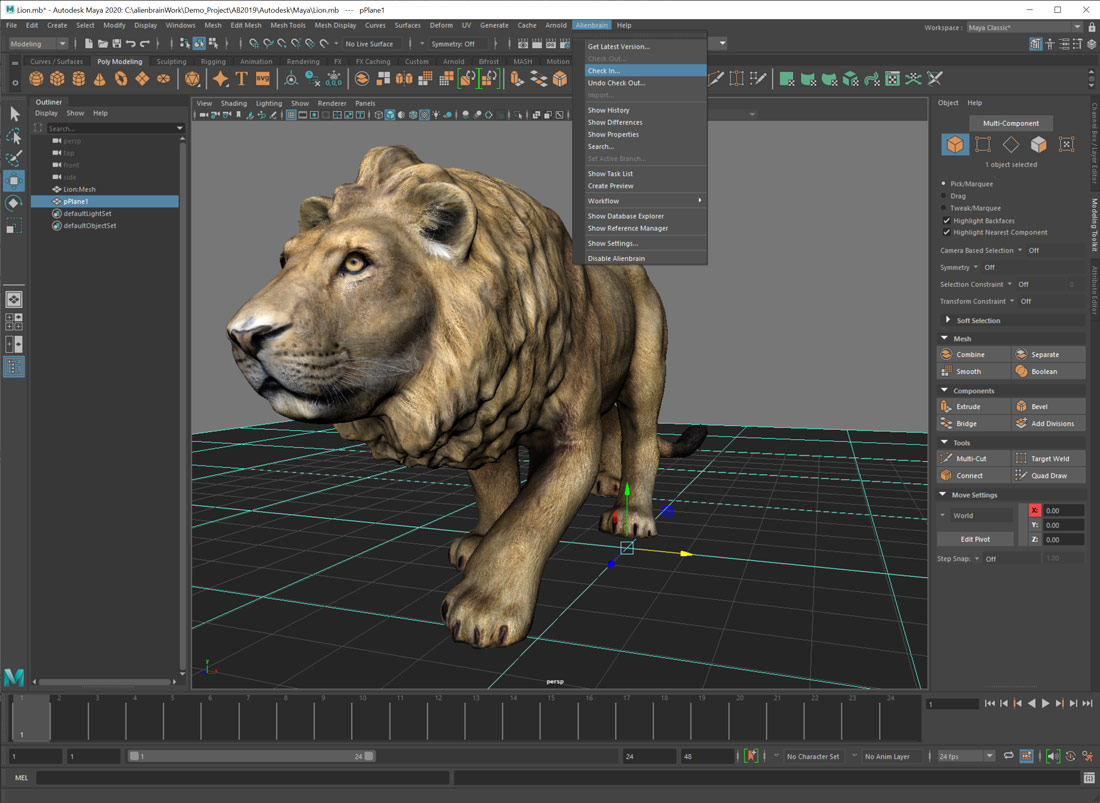
The Maya Interface

  • Workspace Selection
  • Customizing the Interface
  • Shading styles and View options
  • Using Attribute Editor
  • Using Outliner
  • Using Channel Box

Maya Basics – Quick Tour

  • Maya Project Structure
  • Creating and Editing Objects
  • Pivots and Placement
  • Maya Node Structure
  • Assigning Materials
  • Keyframe Animation
  • Basic Lighting
  • Rendering Frames

Polygonal Modeling

  • Polygonal Modeling Principles
  • Creating a polygon model

Nurbs Modeling

  • Understanding NURBS
  • Modeling with NURBS

Curves And Surfaces

  • Creating Curves and Surfaces
  • Editing Curves and Surfaces

Subdivision Surfaces

  • Understanding Subdivision Surfaces
  • Details and Subdivision Surfaces

Digital Painting

  • Drawing
  • Painting
  • Brushes & settings
  • Smudge
  • Burn
  • Blending

Retouching Old & Damaged Pictures

  • Clone stamp
  • Spot Healing

Effects With Filters

  • Liquify
  • Textures
  • Pattern Maker
  • Creating Clouds
  • Applying Lights

Advanced Modeling

  • About Blend Shapes
  • Blend Shapes options
  • Sculpting tools

Module 2 - Texturing & Lighting


Lighting

  • Understanding Lighting
  • Basic Lighting Work Flow
  • Types of Lights
  • Light Manipulator
  • Using Shadows
  • Light Effects

Shading And Texturing

  • Understanding Maya Textures
  • Building Simple Shading Networks
  • Working with UV Editor

Camera

  • Camera types
  • Creating and Animating Cameras
  • Setting the Camera and Resolution
  • Adding Depth of Field
  • Adding Motion Blur

Rendering

  • Understanding Render Settings
  • Hardware Render and Hardware Render Buffer
  • Working in the Render View Window
  • Layer Rendering, Compositing and Editing
  • Mentalray Renderer
  • Custom Shaders
  • Mentalray Lights, Shadows and Fog
  • Mentalray Motion Blur
  • Indirect illumination
  • Image-Based Lighting and HDRI
  • Arnold Renderer
  • Arnold Renderer Settings
  • Maya Software Rendering

Module 3 - Animation

Animation

  • Animation Types
  • Keyframe Animation
  • Understanding Animation Workflow
  • Converting Cycled Animation to Curves
  • Set Key Options
  • Animation Editors
  • Motion Path Animation

Character Setup And Rigging

  • Deformer Types
  • Forward and Inverse Kinematics
  • Hands On: Creating a Skeleton
  • Creating a Full Body IK Skeleton
  • Binding and Weighing the Characters
  • Quick Rigging

Character Animation

  • Reference Sources
  • The Animation process
  • Establishing Timings
  • Refining Your Animation
  • Nonlinear Animation
  • Working with Poses
  • Working with Clips

Module 4 – Visual Fx & Motion Graphics


Working With Bifrost

  • Creating Bifrost Liquid
  • Bifrost Aero
  • Bifrost Emitter
  • Bifrost Collider
  • Creating Bifrost Foam
  • Bifrost Guide, Emission Region & Field

Working With Mash Effects

  • Creating Mash Network
  • Mash Editor
  • Working with Mash Deformers

Cloth Simulation

  • nCloth
  • nCloth with Fields/Solvers
  • nCloth and nConstraints
  • Working with Colliders
  • Modelling Pillow, Tablecloth & Flag

Hair Creation

  • nHair
  • nHair Follicles
  • nHair Distribution
  • XGen for hair creation
  • XGen Modifiers

Who Can Enroll?

  • 3D Artists and Designers
  • Aspiring Animators and Filmmakers
  • Game Developers and Multimedia Students

Course Outcomes:

  • Proficiency in 3D modeling and animation using Maya
  • Ability to create high-quality character rigs and simulations
  • Skills to render cinematic-quality visuals
  • Experience in producing VFX and motion graphics for film or games

Career Opportunities:

  • 3D Modeler
  • Animator
  • Character Rigger
  • VFX Artist
  • Game Environment Designer

Why Choose Us?

  • Professional Instructors: Learn from professionals
  • Creative Project Work: Build a portfolio of industry-relevant work
  • Flexible Learning Options: Online or in-person sessions
  • KHDA-Certified Certificate: Boost your employability with recognized credentials

Eligibility / Requirements:

  • Basic computer knowledge
  • Passion for animation, design, or game creation